What Are Sleep Studies and How Are They Conducted in Sydney?
Sleep studies are diagnostic tests that monitor your body’s functions during sleep to identify disorders like sleep apnea, insomnia, and narcolepsy. These tests track critical metrics including breathing patterns, heart rate, oxygen levels, brain waves, and muscle movements throughout the night.
Sydney offers two primary sleep study types: in-lab overnight studies and home-based portable device studies. In-lab studies take place in specialized sleep clinics or hospital settings where trained technicians monitor you throughout the entire night. Home sleep studies use portable monitoring equipment that you operate yourself in the comfort of your own bedroom.
In-Lab Sleep Study Procedures
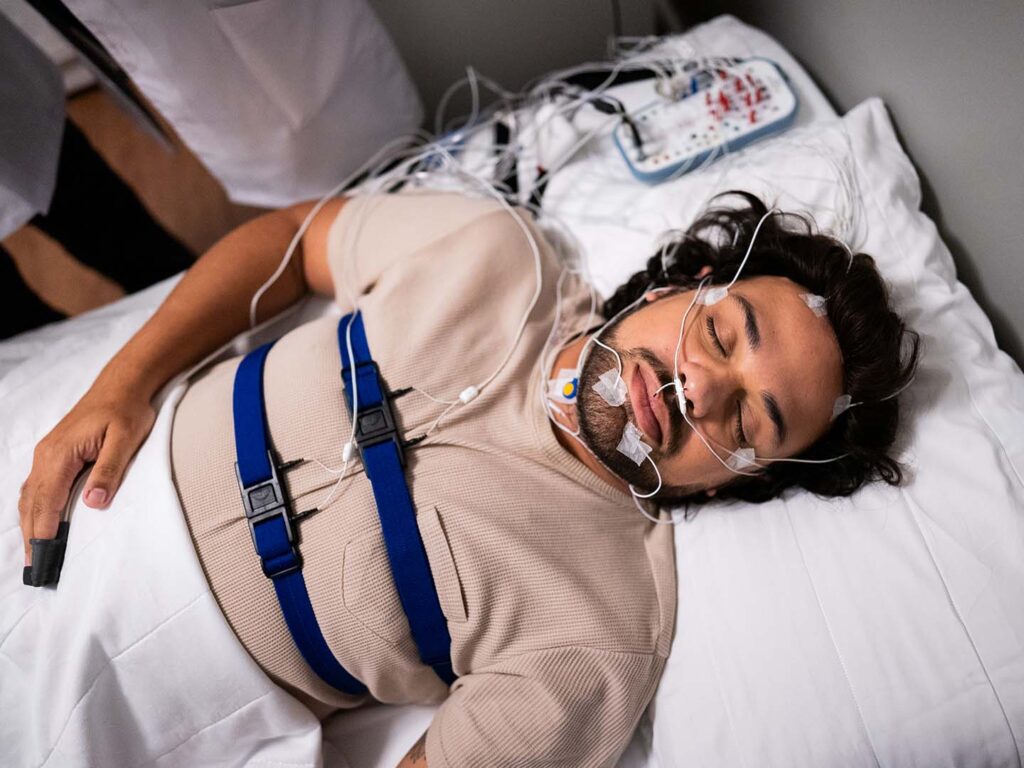
An in-lab sleep study experience differs significantly in complexity and monitoring depth. For anyone evaluating Sydney sleep study cost, it helps to understand what this type of assessment involves. During an in-lab study, you’ll arrive at the facility in the evening where technicians attach multiple sensors to your body:
- Electrodes on your scalp to measure brain activity
- Chest and abdominal bands to monitor breathing effort
- Finger sensors to track oxygen saturation
- Leg sensors to detect movement
- Nasal airflow monitors
You’ll sleep in a private room designed to resemble a comfortable bedroom while equipment records your data. Technicians observe from a separate monitoring room, ensuring proper sensor function and responding to any issues. The next morning, sensors are removed and you’re free to leave.to leave.
Home-Based Sleep Study Process
Home-based diagnostic sleep tests involve a clinic visit where staff teach you how to attach simplified monitoring devices. You’ll typically wear:
- A nasal cannula or breathing sensor
- A chest strap or finger pulse oximeter
- Sometimes additional sensors depending on the test type
You take the equipment home, attach the sensors before bed following provided instructions, and return everything the next day along with completed sleep questionnaires. This option offers convenience but monitors fewer parameters than in-lab studies.
How Much Do Sleep Studies Cost in Sydney?
The cost of sleep studies in Sydney can vary widely depending on where and how the test is done. Home-based studies are generally more affordable, usually costing between $150 and $400, with most patients paying around $200. These tests use portable monitoring devices that track essential sleep metrics without requiring an overnight stay at a facility.
In-lab sleep studies are more expensive because they provide a comprehensive monitoring environment and have specialized staff supervising throughout the night. The average cost for laboratory-based testing in Sydney ranges from $500 to $2,000. This wide variation in price is due to factors such as:
- Facility location and reputation
- Number of parameters monitored during the study
- Duration and complexity of the testing protocol
- Additional services included in the package
Medicare Rebates and Insurance Coverage
Medicare offers partial rebates for eligible sleep studies, which can help reduce the financial burden for patients with valid referrals from their general practitioner or specialist. The amount of the rebate depends on the specific Medicare item number assigned to the test type and usually covers only a portion of the total cost.
Private health insurance can have a significant impact on the costs of home vs lab sleep studies for policyholders with appropriate coverage levels. Patients who have hospital cover with extras may be able to receive substantial rebates or even complete coverage through no-gap arrangements at participating clinics. The actual out-of-pocket expense will vary based on factors such as:
- Policy type and level of coverage
- Waiting periods already served
- Annual limits on diagnostic testing benefits
- Whether the chosen facility has an agreement with the insurer
Patients who do not have private health insurance or whose policies do not cover sleep diagnostics will need to pay the full cost minus any applicable Medicare rebate. It is important to check your coverage details before booking an appointment in order to have accurate cost expectations and find the most economical testing option.
What Factors Influence the Pricing of Sleep Studies in Sydney?
Several factors determine the cost of sleep studies in Sydney. Understanding these factors can help you get a better idea of what to expect when it comes to pricing.
1. Location and Setting
The most significant factor affecting the price of sleep studies is where they are conducted. There are two main types of sleep studies: home-based tests and in-lab studies.
- Home-based tests are done in the comfort of your own home. They require minimal infrastructure and staff supervision, which helps keep costs down. The price range for home-based tests is typically between $150 and $400.
- In-lab studies, on the other hand, are conducted in specialized sleep clinics or hospitals. These facilities have dedicated rooms for overnight stays, where technicians monitor patients during their sleep. In-lab studies also require expensive equipment such as polysomnography machines. As a result, prices for in-lab studies can range from $500 to $2,000.
2. Complexity and Number of Monitored Parameters
Another factor that influences pricing is the complexity of the sleep study and the number of parameters being monitored.
Basic home sleep tests usually track three to four channels:
- Airflow
- Breathing effort
- Oxygen levels
- Heart rate
These limited parameters are sufficient for straightforward screening of conditions like sleep apnea.
In contrast, in-lab polysomnography monitors up to 16 different channels simultaneously:
- Brain wave activity (EEG)
- Eye movements (EOG)
- Muscle tone and leg movements (EMG)
- Heart rhythm (ECG)
- Oxygen saturation
- Respiratory effort and airflow
- Body position
- Snoring intensity
Each additional parameter being monitored requires specialized sensors, technical expertise for data interpretation, and extended analysis time. Therefore, studies investigating complex conditions such as narcolepsy or periodic limb movement disorder will have higher costs due to comprehensive monitoring requirements.
3. Insurance Coverage and Medicare Rebates
Insurance coverage can play a significant role in determining how much you pay out-of-pocket for sleep studies.
If you have private health insurance with hospital cover, it can substantially reduce your expenses. Many clinics in Sydney offer no-gap arrangements with specific health funds, meaning eligible patients pay nothing for in-lab studies. However, without insurance coverage, you will be responsible for paying the full facility fee.
Medicare also provides rebates for medically necessary sleep studies when referred by a specialist. The rebate covers a portion of the diagnostic test cost but rarely eliminates all expenses entirely. Patients typically still have gap fees ranging from $100 to $500 depending on the provider.
4. Additional Specialist Fees
In addition to the costs associated with conducting the sleep study itself, there may be additional fees charged by sleep physicians.
Sleep doctors charge separate consultation fees for initial assessments ($150-$300) and follow-up appointments to discuss results ($100-$250). Some facilities may also impose extra charges for detailed diagnostic reports prepared by sleep specialists.
It’s important to note that these professional fees exist independently from the technical cost of performing
How Can Patients Minimize Their Out-of-Pocket Expenses for Sleep Studies?
1. Explore No-Gap Private Health Fund Options
No-gap private health fund options represent the most effective way to eliminate costs entirely. Many Sydney clinics have arrangements with specific health insurers that cover the full expense of in-lab sleep studies for patients with appropriate hospital cover. Eligible patients pay nothing out-of-pocket when using these partnered facilities, making this the preferred option for reducing sleep study costs Sydney.
2. Check Medicare Rebates for Sleep Tests
Medicare rebates sleep tests provide substantial financial relief for qualifying patients. To check eligibility, patients should obtain a referral from their GP or specialist, as Medicare typically covers a portion of costs for medically necessary sleep studies. The rebate amount varies based on the study type—Level 1 polysomnography receives higher rebates than simpler home-based tests. Patients can verify their specific rebate entitlement by:
- Contacting Medicare directly with their referral details
- Asking their referring doctor about the item number on the referral
- Checking the Medicare Benefits Schedule online for current rebate amounts
- Confirming with the sleep clinic whether they process Medicare claims on-site
3. Ensure Upfront Cost Transparency
Upfront cost transparency prevents unexpected financial burdens. Before booking, patients should request a detailed breakdown covering:
- Base study fees
- Specialist consultation charges
- Report preparation costs
- Follow-up appointment fees
- Any equipment or consumable charges
Many clinics provide written quotes that specify the total cost, Medicare rebate amount, and final out-of-pocket expense. This clarity allows patients to compare facilities and make informed decisions about health insurance no-gap options versus standard billing arrangements.
4. Verify Coverage with Your Private Health Insurer
Patients with private health insurance should contact their insurer to confirm their level of coverage before scheduling. Some policies require waiting periods or specific hospital cover tiers to access benefits, making early verification essential for accurate cost planning.
Related : How to Access a Bulk-Bill Sleep Study Sydney Clinics Provide for Affordable Care